Jersey City's buildable land is a study in contrasts: historic downtown sits on glacial outwash and decayed rock, while the waterfront is largely artificial fill placed over former marshland. The humidity off the Hudson River accelerates corrosion in rebar and keeps the water table within six feet of grade across much of the city. For shallow foundation design, this means bearing capacity is rarely the first concern; settlement control and moisture management dominate the conversation. We rely on plate load tests when an oversized footing is proposed on variable fill, because correlations from blow counts alone can mislead in this geology. The International Building Code (IBC Chapter 18) governs our approach, and we interpret site conditions through the lens of local experience, not textbook assumptions.
In Jersey City, the water table is often the real engineer of record—ignore it and even a well-proportioned footing becomes a long-term problem.
Service characteristics in Jersey City
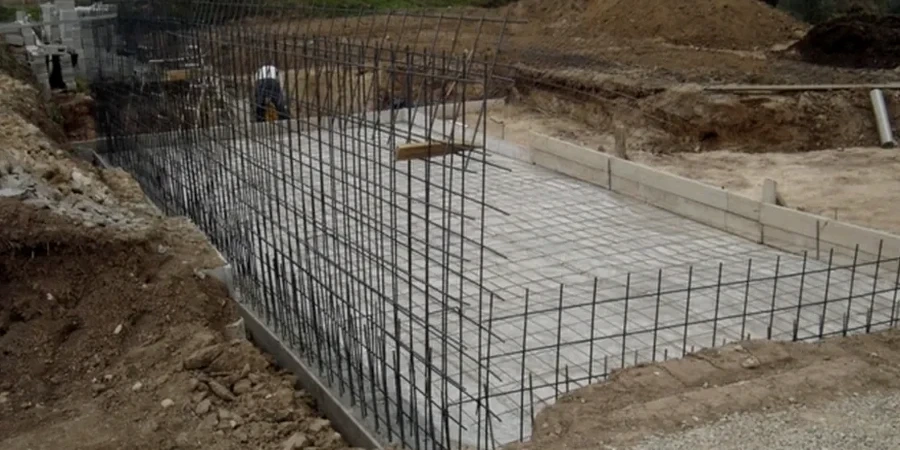
Critical ground factors in Jersey City
Jersey City's rapid redevelopment since the early 2000s has pushed foundation engineering into parcels that were bypassed for a century—old industrial lots, filled-in piers, and former rail yards. These sites carry undocumented fill with brick, slag, and sometimes buried timber piles that create hard-soft contrasts under a footing. The biggest design risk is differential settlement across adjacent columns, which can rack steel frames and crack masonry within the first five years. Liquefaction potential in the saturated sands along the Hackensack River corridor adds a seismic dimension that ASCE 7 requires us to evaluate. A shallow foundation on untreated fill in a Site Class F condition simply won't meet performance objectives. We address this through rigorous site characterization and, when necessary, ground improvement before placing footings.
Our services
Shallow foundation design in Jersey City spans a range of structural and geotechnical solutions, each matched to the subsurface conditions we encounter during investigation. Our team delivers the following engineering services:
Isolated and Combined Footing Design
We size footings using site-specific bearing values from field tests, not code defaults. Settlement analysis runs for every column line, accounting for fill thickness variation across the site.
Mat Foundation Analysis
For waterfront fill sites with erratic subsurface conditions, we model mat foundations using modulus of subgrade reaction derived from plate load tests or SPT correlations calibrated to local geology.
Ground Improvement for Footing Support
When in-situ soils cannot meet settlement criteria, we design compaction grouting or vibro-replacement programs to stiffen the bearing stratum before footing construction begins.
Common questions
What is the typical cost range for a shallow foundation design in Jersey City?
For a standard residential or light commercial project, shallow foundation design in Jersey City typically falls between US$1,740 and US$3,220, depending on the number of borings required and the complexity of the fill analysis. A three-story rowhouse on a tight lot in the Heights will land at the lower end; a mixed-use building on the waterfront with deep fill and a mat foundation will push toward the upper end. The fee includes site investigation planning, bearing capacity and settlement calculations, and sealed design drawings.
How deep do footings need to be in Jersey City to get below the frost line?
The IBC and New Jersey building code require a minimum footing depth of 36 inches below finished grade for frost protection. In Jersey City, we rarely control the design by frost depth alone: the water table and fill thickness usually push footings deeper. It's common to excavate to four or five feet in the waterfront areas to reach material that provides consistent bearing and is less affected by seasonal moisture fluctuation.
Can you use shallow foundations on fill material in Jersey City?
Yes, but only after thorough investigation. Much of the fill in Jersey City is uncontrolled and contains debris, so we need to verify its thickness, composition, and density through test pits or borings. If the fill is shallow and underlain by competent glacial material, we often recommend over-excavation and replacement with engineered fill. For thicker fills, we evaluate settlement under load and may specify a mat foundation or ground improvement to achieve acceptable performance. More info.