The 2018 New Jersey edition of ASCE 7 sets minimum design loads, but soft soils beneath Jersey City demand more than code minimums. Urban fill, tidal marsh deposits, and pockets of organic silt are common across the city. Standard shallow footings often fail to meet settlement criteria in these conditions. The stone column technique provides a reliable ground improvement path: vibrated aggregate columns that densify surrounding soil and drain excess pore pressure. This firm specifies column diameter, spacing, and depth based on project loads and site-specific stratigraphy. For sites near the Hackensack River waterfront, where compressible clays extend past 30 feet, we combine stone columns with a load test program to verify modulus of subgrade reaction before foundation construction.
Stone columns densify the soil mass while providing vertical drainage paths — settlement occurs during construction, not after.
Service characteristics in Jersey City
Critical ground factors in Jersey City
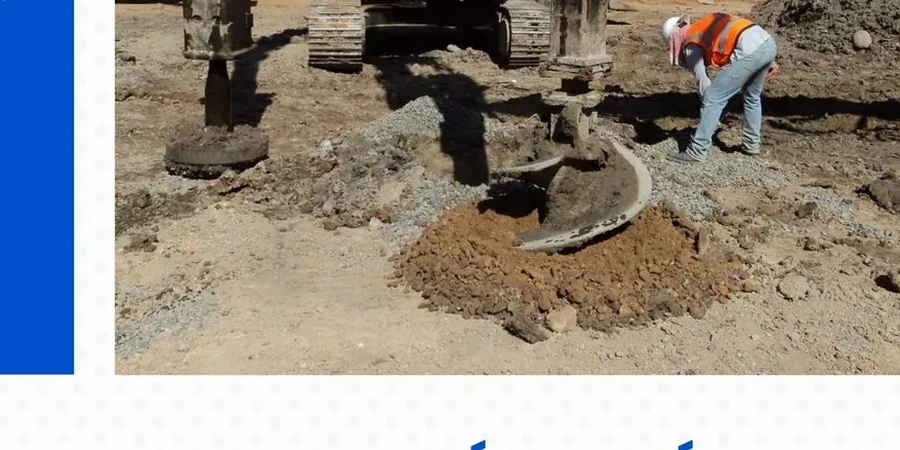
The vibrator rig is a top-feed or bottom-feed machine suspended from a crawler crane. In Jersey City's tight lots, the crane must maneuver between party walls and overhead utilities. The probe penetrates under its own weight plus vibration and water flush. If the operator misjudges the stone feed rate, a column can neck or lose continuity. Soft clay lenses demand careful amperage monitoring: a sudden drop in current signals the probe has wandered into a weak zone. We record amperage and stone consumption per linear foot for every column. Adjacent settlement markers and inclinometers track ground movement in real time. This level of monitoring meets the observational method outlined in IBC Section 1803 and keeps neighboring property owners informed.
Our services
Stone column design is one component of a broader ground improvement strategy. The services below support site characterization, verification, and complementary techniques.
Modulus Load Testing
Plate load tests on single columns and column groups to confirm design stiffness before footing construction.
Post-Installation CPT
Cone penetration soundings between columns to verify density increase in the treated soil mass.
Vibrocompaction
Deep densification of granular soils using vibratory probes, suitable for sands without significant fines content.
Settlement Monitoring
Survey monuments and deep benchmarks to track post-treatment settlement during the preloading period.
Common questions
How much does stone column design cost for a Jersey City project?
Design fees for stone column ground improvement in Jersey City typically range from US$1,290 to US$5,900, depending on site size, number of columns, and required load test program. Smaller residential lots fall at the lower end; commercial buildings with extensive column grids reach the upper range.
What soil types in Jersey City work best with stone columns?
Stone columns perform best in loose sands, soft silts, and mixed urban fill — all common along the Hudson County waterfront. They are less effective in very soft organic clays with undrained shear strength below 15 kPa unless combined with encasement or a preloading program.
Does IBC require load testing on stone columns?
IBC Section 1803 requires verification of ground improvement performance. A modulus load test on at least one column per distinct soil zone is standard practice. For larger sites, ASTM D1194 plate load procedures are referenced to confirm that treated ground meets the design bearing pressure and settlement criteria. More info.